
 English
 Français
 Deutsch
 Italiano
 Pусский
 Español
 Português
 Nederlands
 العربية
 Romania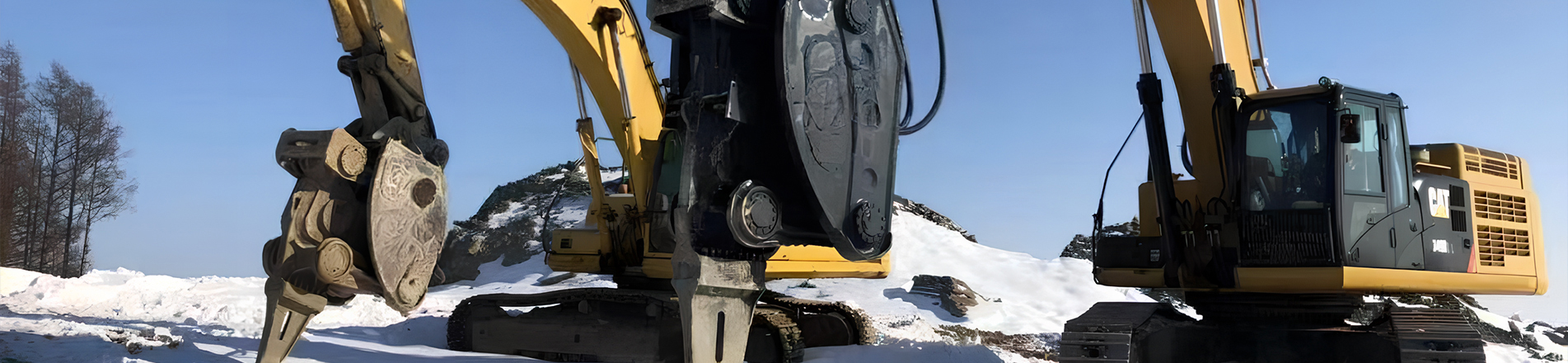

Choosing an excavator attachment for hard ground is not simply a matter of matching the attachment to the excavator's tonnage. Soil strength, rock structure, hydraulic flow, working pressure, attachment weight and the required production rate all affect the result. A Vibro Ripper can be highly effective when the material is hard, compacted, fractured or layered, but it should be selected according to the actual working conditions rather than machine size alone.
For contractors, quarry operators and equipment distributors, the key question is not whether a ripper is powerful enough. The more useful question is whether the attachment can penetrate the target material efficiently while keeping the excavator within its hydraulic and operating limits.
1. When Is a Vibro Ripper the Right Attachment?
A conventional bucket works efficiently when the ground can be penetrated with reasonable digging force. Problems start when the bucket teeth repeatedly slide over hard layers, compacted soil or fractured rock without establishing a proper bite. In these conditions, forcing the bucket harder can increase tooth wear and hydraulic load without producing a corresponding increase in output.
A Vibro Ripper approaches the problem differently. It concentrates force through a narrow ripping point while vibration helps loosen resistant material. This makes it particularly useful for weathered rock, layered rock, hard soil, slate, compacted ground and other materials that are difficult to excavate directly with a standard bucket.
Komatsu, for example, describes a single-shank ripper as suitable for site preparation, removing rocks, pavement and other obstacles before normal excavation. Other manufacturers similarly position vibrating rippers for hard soil, fractured rock and difficult ground conditions. :contentReference[oaicite:1]{index=1}
| Ground Condition | Standard Bucket | Vibro Ripper | Hydraulic Breaker |
|---|---|---|---|
| Soft soil | Excellent | Usually unnecessary | Usually unnecessary |
| Compacted soil | Limited | Suitable | Possible |
| Weathered rock | Limited | Highly suitable | Suitable |
| Fractured or layered rock | Limited | Highly suitable | Suitable |
| Very hard massive rock | Poor | Condition dependent | Often preferred |
| Concrete and asphalt | Poor | Application dependent | Common choice |
2. Match the Ripper to the Excavator, Not Just the Tonnage
Excavator operating weight is an important starting point, but it is only one part of attachment selection. The excavator must provide sufficient hydraulic flow and pressure, while the attachment weight must remain compatible with the carrier's lifting capacity and working stability.
Published Vibro Ripper specifications show how quickly hydraulic requirements increase with machine size. One current specification range lists models from approximately 22–30 ton excavators through 120–200 ton machines, with working flow increasing from around 160–180 L/min to 650–700 L/min. Working pressure across the range is generally around 27–28 kg/cm². :contentReference[oaicite:2]{index=2}
| Excavator Class | Example Ripper Model | Typical Flow Range | Approx. Attachment Weight |
|---|---|---|---|
| 22–30 t | SV30 | 160–180 L/min | 3,600 kg |
| 30–35 t | SV50 | 240–260 L/min | 4,800 kg |
| 36–45 t | SV60 | 300–320 L/min | 5,500 kg |
| 50–65 t | SV-D6 | 360–400 L/min | 8,600 kg |
| 70–85 t | SV-D8 | 420–460 L/min | 9,500 kg |
| 85–120 t | SV-D10 | 450–500 L/min | 12,000 kg |
These figures illustrate why a 50-ton excavator should not automatically be paired with a ripper simply because its operating weight falls within a nominal range. Before ordering, confirm the excavator's auxiliary hydraulic flow, operating pressure, return-line requirements, hydraulic cooling capacity and quick-coupler or pin dimensions.
3. Hydraulic Flow Is One of the Most Important Selection Parameters
Hydraulic flow determines how much hydraulic oil the attachment receives during operation. If the excavator cannot supply the required flow, the ripper may not reach its intended operating frequency or power. If the system is configured incorrectly, excessive heat and inefficient operation can also become problems.
A practical matching process should therefore begin with four numbers:
| Parameter | What to Check | Why It Matters |
|---|---|---|
| Hydraulic flow | L/min | Controls hydraulic energy delivered to the attachment |
| Operating pressure | bar or MPa | Determines whether the attachment can operate within its designed pressure range |
| Attachment weight | kg | Affects stability, lift capacity and boom loading |
| Carrier class | tons | Defines the practical operating envelope |
For example, published specifications for a 36–45 ton Vibro Ripper class can require roughly 300–320 L/min, while a 70–85 ton class may require approximately 420–460 L/min. :contentReference[oaicite:3]{index=3} This is a substantial difference and demonstrates why hydraulic matching should be verified from the excavator's actual hydraulic system rather than estimated from machine size.
4. How Material Conditions Affect Productivity
There is no single production rate that applies to every rock excavation project. Rock hardness, compressive strength, fracture spacing, bedding direction and moisture conditions can change penetration speed significantly. Rock excavation references commonly evaluate both hardness and compressive strength when determining the appropriate attachment. :contentReference[oaicite:4]{index=4}
A useful field assessment is to divide the working material into three categories: compacted soil, fractured or weathered rock, and massive hard rock. Vibro Rippers generally have their strongest application advantage where the material can be loosened mechanically rather than requiring continuous percussion against intact rock.
| Material Structure | Expected Ripping Difficulty | Recommended Approach |
|---|---|---|
| Loose / soft soil | Low | Use standard bucket |
| Hard clay / compacted soil | Medium | Ripper or reinforced bucket |
| Weathered rock | Medium | Vibro Ripper |
| Fractured / layered rock | Medium–High | Vibro Ripper with suitable tooth design |
| Massive hard rock | High | Evaluate breaker, drilling or other rock excavation methods |
5. Ripping Efficiency Depends on the Complete Excavation Cycle
Production should not be measured only by how quickly the attachment penetrates the ground. A contractor should calculate the complete excavation cycle: penetration, ripping, material collection, loading, attachment repositioning and truck loading.
For example, a ripper may spend more time preparing the material but allow a bucket to achieve much higher fill consistency afterward. The important measurement is therefore useful material removed per operating hour rather than attachment movement alone.
Published manufacturer information shows some Vibro Ripper systems operating at approximately 28–40 Hz depending on model, while larger units can require several hundred liters of hydraulic flow per minute. :contentReference[oaicite:5]{index=5} These specifications should be treated as equipment characteristics rather than guaranteed production rates because actual output depends heavily on site conditions.
Simple productivity calculation
Hourly production = Material removed per cycle × Cycles per hour × Effective working time
Effective working time should account for repositioning, attachment movement, truck availability, operator breaks and other site delays.
For projects involving both ripping and loading, a common workflow is to loosen a manageable section with the ripper and then switch to a bucket. This approach avoids using a bucket against material that it cannot penetrate efficiently.
6. Vibro Ripper vs. Breaker vs. Crusher
Attachment selection becomes easier when each tool is assigned a specific job. A Vibro Ripper is primarily a ground-loosening tool. A hydraulic breaker is designed for concentrated impact against hard material. A concrete crusher is designed to crush and separate concrete structures, often where demolition rather than ground excavation is the primary task.
For buyers comparing excavation equipment, a Vibro Ripper for Hard Rock is generally worth considering when the material is fractured, weathered or layered and can be loosened mechanically.
When the project involves reinforced concrete demolition, a Concrete Crusher for Demolition may be more appropriate because its working principle is different from that of a ground-ripping attachment.
For applications where concentrated impact is required, buyers can also evaluate a Hydraulic Breaker Hammer for Excavators according to the excavator class, impact energy and material strength.
| Attachment | Primary Function | Typical Material | Main Selection Factor |
|---|---|---|---|
| Vibro Ripper | Loosening and ripping | Hard soil, weathered and fractured rock | Hydraulic flow + carrier size + material structure |
| Hydraulic Breaker | Percussive breaking | Concrete, rock, asphalt | Impact energy + frequency + carrier class |
| Concrete Crusher | Crushing and demolition | Reinforced and unreinforced concrete | Jaw force + opening + excavator capacity |
7. What Should Buyers Check Before Ordering?
For B2B buyers, the most useful specification sheet is one that goes beyond excavator tonnage. Ask the attachment supplier for the complete hydraulic and mechanical requirements before finalizing the model.
| Check Item | Buyer Question |
|---|---|
| Excavator compatibility | What exact excavator models and operating weights are supported? |
| Hydraulic flow | What continuous and maximum flow does the attachment require? |
| Hydraulic pressure | What is the recommended working pressure? |
| Attachment weight | Can the excavator safely handle the attachment at the required working radius? |
| Wear parts | Are teeth and other high-wear components replaceable? |
| Working material | Is the target material compacted soil, fractured rock or massive rock? |
| Service requirements | What inspection, lubrication and maintenance intervals are required? |
8. A Practical Selection Method for Contractors
The safest way to select a Vibro Ripper is to work backward from the job rather than starting with a model number. First identify the material and its structure. Next confirm the excavator's auxiliary hydraulic flow and pressure. Then check attachment weight, mounting dimensions and working stability.
After these basic compatibility checks, compare the expected production cycle. If the ripper can consistently loosen the working face and allow the bucket to load material efficiently, it can become part of a two-stage excavation process rather than simply another attachment on the machine.
For distributors and fleet operators, model coverage is also important. A product range covering different excavator classes allows the same attachment concept to be applied across multiple customer segments, from medium excavators to large quarry and mining machines.
The product range shown for Vibro Ripper models includes equipment matched to excavators from approximately 30–35 tons through 85–120 tons and beyond. The correct model should still be confirmed against the customer's actual hydraulic system and working conditions before quotation or production.
Final Buyer Checklist
- Identify the actual ground or rock condition before choosing the attachment.
- Check excavator operating weight together with auxiliary hydraulic flow and pressure.
- Confirm attachment weight and mounting dimensions.
- Consider fracture patterns and rock structure, not only rock hardness.
- Compare the complete excavation cycle instead of attachment penetration speed alone.
- Choose a Vibro Ripper for suitable ripping and loosening applications rather than treating it as a universal replacement for a breaker.
- Confirm wear-part availability and after-sales support before placing a bulk order.
For contractors working with hard soil, weathered rock or fractured ground, the right Vibro Ripper can make the excavation process more predictable by preparing difficult material for subsequent loading. The most reliable selection is the one that matches the excavator's hydraulic capacity, attachment weight and the physical characteristics of the material being removed.