Shanghai Yunzhiguangshu Import and Export co.ltd always focus on attachments & parts of excavator more than 20 years. With positive working attitude,patient after-sale service and reliable quality,we have won the respect and trust of our customers.
Author
Shanghai Yunzhiguangshu Import and Export co.ltd always focus on attachments & parts of excavator more than 20 years. With positive working attitude,patient after-sale service and reliable quality,we have won the respect and trust of our customers.
By: May Xie / General Sales Manager
Shanghai Yunzhiguangshu
Oct 25, 2026

You’ve decided a vibro ripper not hydraulic breaker fits your project . But choosing the right model isn‘t just about looking at the excavator’s tonnage.
If you want maximum efficiency without destroying your machine, you must look at four critical hydraulic specs: Working Pressure, Flow, Power, and Weight.
Here is how we match them at Yuntang brand.
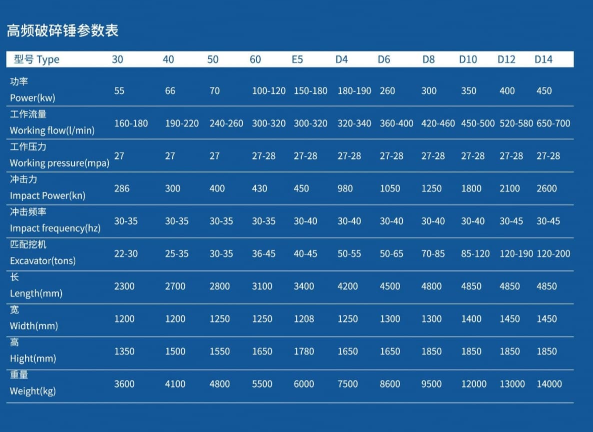
If your excavator‘s auxiliary hydraulic pressure is lower than the vibro ripper’s requirement, the vibro ripper will lose impact force. It‘s like trying to run a diesel engine on low-octane fuel. Our vibro rippers typically require 27–28 MPa to maintain consistent rock-breaking power.
Flow controls the vibration frequency. If the flow is too low, the vibro ripper works slowly and your hydraulic oil overheats. If it’s too high, you risk blowing out the seals. For example, our Model SV-30 needs 160–180 L/min, while the Model SV-60 requires 300–320 L/min.
This is the total energy your excavator delivers. Underpowering a vibro ripper wastes time; overpowering it can cause internal damage.
A vibro ripper is heavy, and continuous vibration creates dynamic loads. The attachment weight must never exceed your excavator‘s safe lifting limits.
Let’s look at two common configurations:
Matching a 22–30 ton excavator (Model SV-30):
Weight: 3,600 kg | Flow: 160–180 L/min | Pressure: 27 MPa | Power: 55 kW
Matching a 36–45 ton excavator (Model SV-60):
Weight: 5,500 kg | Flow: 300–320 L/min | Pressure: 27–28 MPa | Power: 100–120 kW
Just last week, a customer tried to mount a Model SV-60 on a 30-ton machine. It had the physical weight capacity, but his excavator’s pump couldn‘t supply the 300 L/min flow.
The result? The ripper vibrated weakly, the hydraulic oil cooked, and the project stalled. He should have used the Model SV-30. It’s a costly lesson.
Don’t guess by tonnage alone. Send us your excavator‘s exact model, hydraulic flow, and pressure specs. Our engineers will cross-reference them with our parameter charts and tell you exactly which vibro ripper fits. If you are avaible, give us the working condition pictures will be good to choose as well.
———————————————————————————————————————————
Coming Up Next: Hydraulic Scrap Shears in Action
That wraps up our series on vibro rippers. But breaking rock is only half the story.
In our next series, we’re shifting focus to the scrapyard. We’ll explore how hydraulic scrap shears (like our Eagle Beak Shears) help contractors dominate the scrap metal industry—from processing heavy steel to maximizing recycling profits.
Stay tuned!